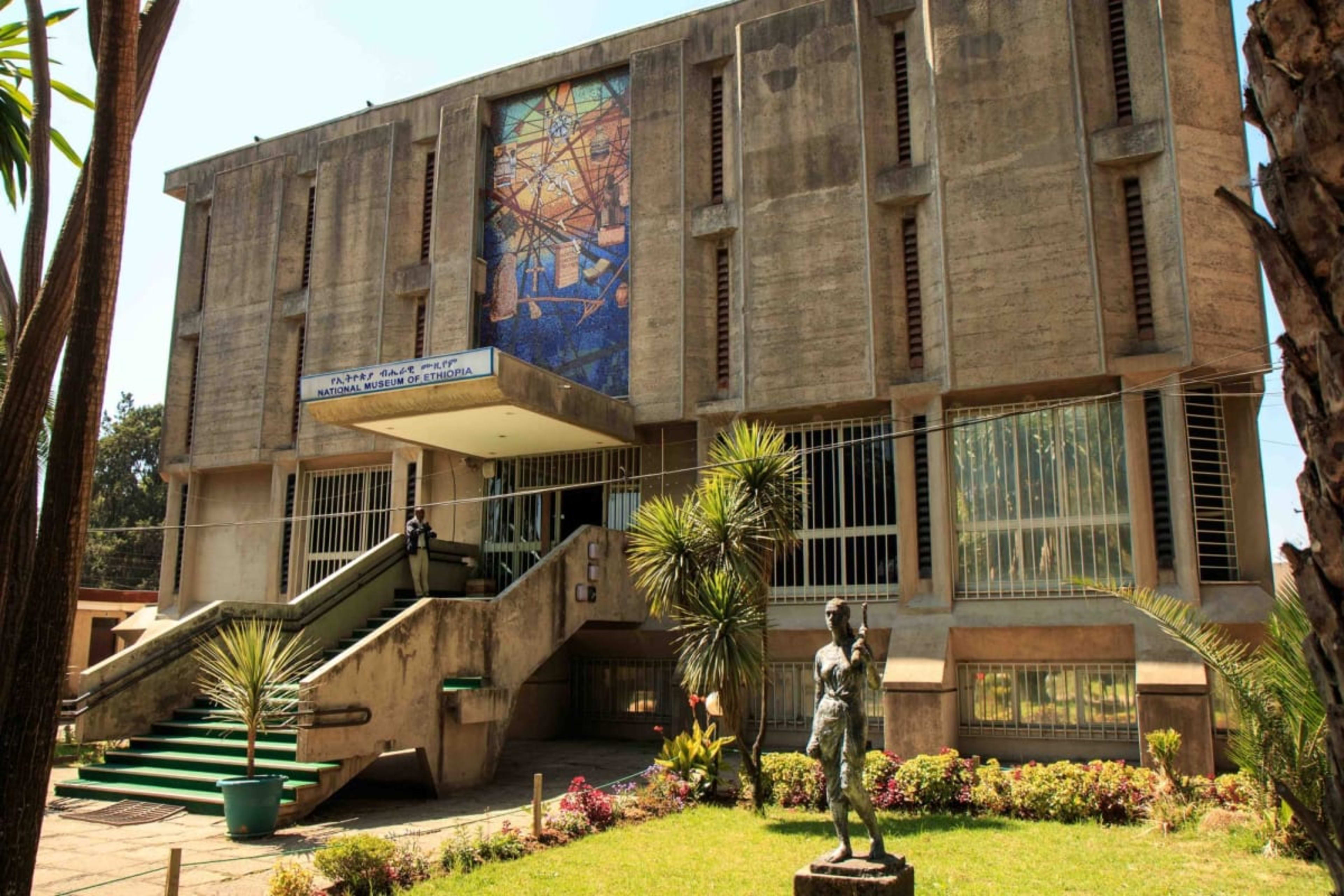
The National Museum of Ethiopia
The Ethiopian National Museum is the premier museum in Addis Ababa and one of the most important in Africa, home to a remarkable collection that spans millions of years of human history. Most famously, the museum houses Lucy — the 3.2-million-year-old fossilised hominid skeleton (Australopithecus afarensis) discovered in 1974 in the Afar region of Ethiopia — which forever changed our understanding of human origins.
What to See
The Palaeontology Gallery
The ground floor is dedicated to prehistoric life, showcasing fossils and casts of some of humanity's earliest ancestors. Beyond Lucy, you can view Ardi (Ardipithecus ramidus), an even older hominid specimen, along with ancient stone tools and wildlife remains from Ethiopia's distant past.
Fine Arts Collection
The upper floors contain an extraordinary collection of traditional Ethiopian art, including religious paintings, illuminated manuscripts, decorated crosses, and ceremonial robes. The exquisitely detailed panel paintings of religious scenes — created by skilled Gondarene and Lalibela artists — give a window into centuries of Ethiopian Orthodox Christian artistic tradition.
Ethnographic Exhibits
Explore the cultural diversity of Ethiopia's 80+ ethnic groups through traditional clothing, musical instruments, jewellery, household objects, and ceremonial artefacts. Each exhibit celebrates the ingenuity and artistry woven into everyday Ethiopian life.
Imperial Artefacts
The museum also displays items from the imperial era, including personal effects from Emperor Haile Selassie's reign, royal thrones, state gifts, and regalia that chart modern Ethiopian political history.
Visitor Tips
- Allow at least two hours for a thorough visit.
- Knowledgeable guides are available for hire at the entrance.
- Photography is permitted in most sections; check for restrictions near ancient fossils.
- The museum gift shop sells quality reproductions and Ethiopian crafts.