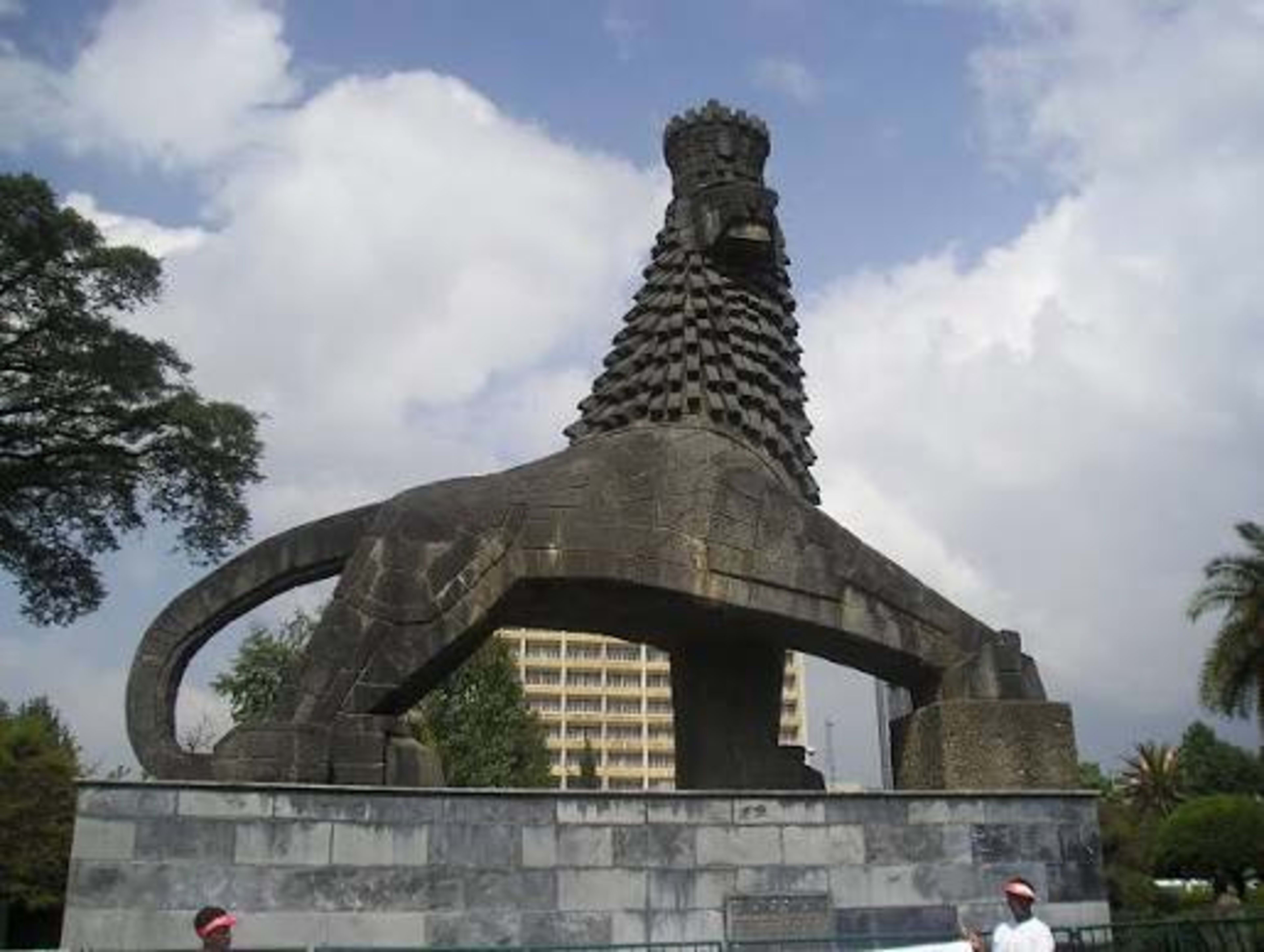
Lion of Judah Statue
The Lion of Judah Statue is one of the most iconic symbols of Ethiopian sovereignty and imperial heritage, standing as a powerful emblem of the nation's royal lineage and proud history. Crafted from cast iron and bronze, the majestic lion — the historical symbol of the Tribe of Judah and of Ethiopia's emperors — has presided over central Addis Ababa through decades of turbulent history.
Originally placed at the railway station terminus to welcome arriving dignitaries, the statue was looted during the Italian occupation of Ethiopia (1936–1941) and transported to Rome, where it stood outside the Porta San Paolo. Following Ethiopia's liberation, Emperor Haile Selassie petitioned for its return. The statue was eventually brought back and re-erected in Addis Ababa, where it stands as a triumphant symbol of Ethiopia's sovereignty and resilience.
Historical Significance
The lion holds deep symbolism in Ethiopian culture. The Lion of Judah is the traditional symbol of the imperial house, referenced in the biblical Book of Revelation and central to the Rastafari faith worldwide. For Ethiopians, the statue represents not only the monarchy but also national identity and the unbroken continuity of one of the world's oldest civilisations.
The statue's journey to Rome and back is itself a story of colonialism, resistance, and restoration — a narrative that resonates deeply with Ethiopian national consciousness.
What to See
The Statue Itself
The cast-iron lion is rendered with commanding presence — a proud mane, powerful stance, and one raised paw resting on the imperial globe. The level of detail in the mane and musculature makes it a remarkable work of art. Up close, visitors can see the texture and craftsmanship of the original casting.
Railway Station Context
The statue stands near the historic Addis Ababa–Djibouti Railway Station, the terminus of the first railway to connect landlocked Ethiopia with the sea. The station building itself is a piece of early 20th-century colonial-era architecture and forms a historic ensemble with the lion monument.
The Surrounding Plaza
The statue occupies a roundabout plaza and is best appreciated on foot, where visitors can walk around it and photograph it from multiple angles. Street vendors and food carts typically occupy the surrounding area.
Visitor Tips
- Best photographed in morning light when the sun catches the bronze tones.
- The area around the station is busy and commercial — keep an eye on belongings.
- Combine your visit with the nearby Merkato for a full half-day exploration of central Addis.
- A small café directly across from the station is a good spot to rest and observe the monument from a distance.