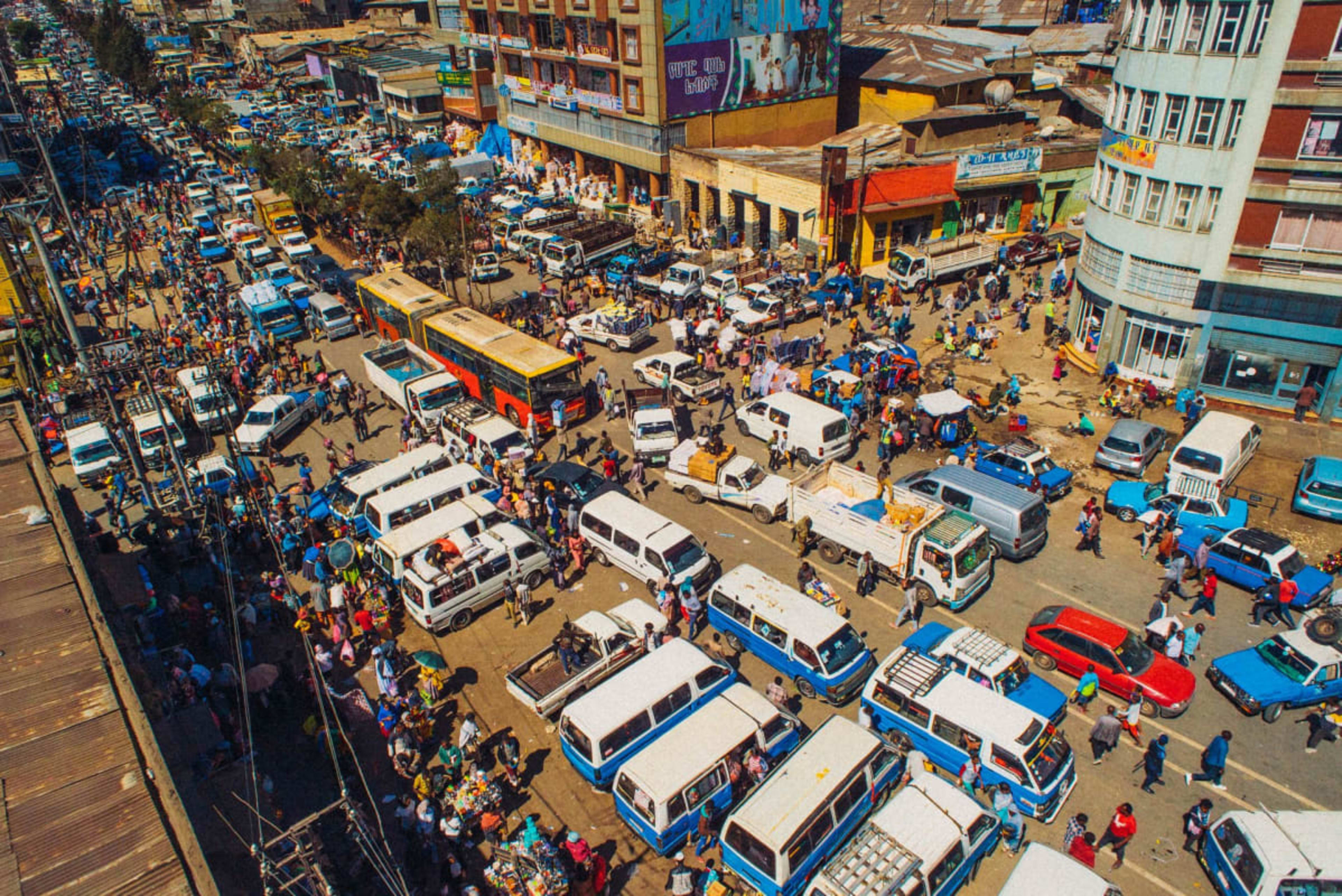
Merkato
Merkato is one of the largest open-air markets in Africa — an extraordinary, chaotic, and endlessly fascinating bazaar that sprawls across several square kilometres in the Addis Ketema district of Addis Ababa. For hundreds of thousands of traders and shoppers, Merkato is the commercial heart of Ethiopia: a city within a city, operating by its own rules, rhythms, and logic.
The Scale of Merkato
With an estimated 13,000 registered traders and hundreds of thousands of daily visitors, Merkato is overwhelming in its scale. The market is divided into zones — broad categories of goods that cluster together, making navigation slightly easier once you know the layout.
What to Find
Spices and Coffee
Some of the most photogenic and aromatic sections of Merkato are devoted to spices. Pyramids of berbere (the essential Ethiopian spice blend), turmeric, fenugreek, cardamom, and dried chillies fill sacks and bowls. Freshly roasted coffee beans and speciality coffee varieties fill the air with incredible fragrance.
Traditional Textiles and Clothing
The textile zones overflow with traditional habesha kemis (white cotton dresses), netela (shawls), gabi (blankets), and modern clothing. Embroidered borders, hand-woven patterns, and natural dyes reflect centuries of Ethiopian textile artistry.
Gold and Silver Jewellery
Jewellery shops line entire streets, selling elaborate gold and silver pieces — traditional Ethiopian cross pendants, Lalibela crosses, wedding jewellery, and amulets. Bargaining is expected and part of the experience.
Ceramics and Crafts
Clay jebena coffee pots, traditional injera baskets (mesob), woven goods, and wooden artefacts can be found in abundance at prices far below tourist shops.
Grains and Pulses
Enormous sacks of teff, sorghum, millet, lentils, chickpeas, and fava beans fill the grain section — the raw materials for Ethiopia's celebrated cuisine.
Visitor Tips
- Go with a local guide or a trusted contact — the market is easy to get lost in.
- Keep valuables secure; the market attracts pickpockets targeting distracted visitors.
- Morning visits (7–10 AM) are cooler and less crowded.
- Bargaining is expected for most goods; start at around 50% of the asking price.