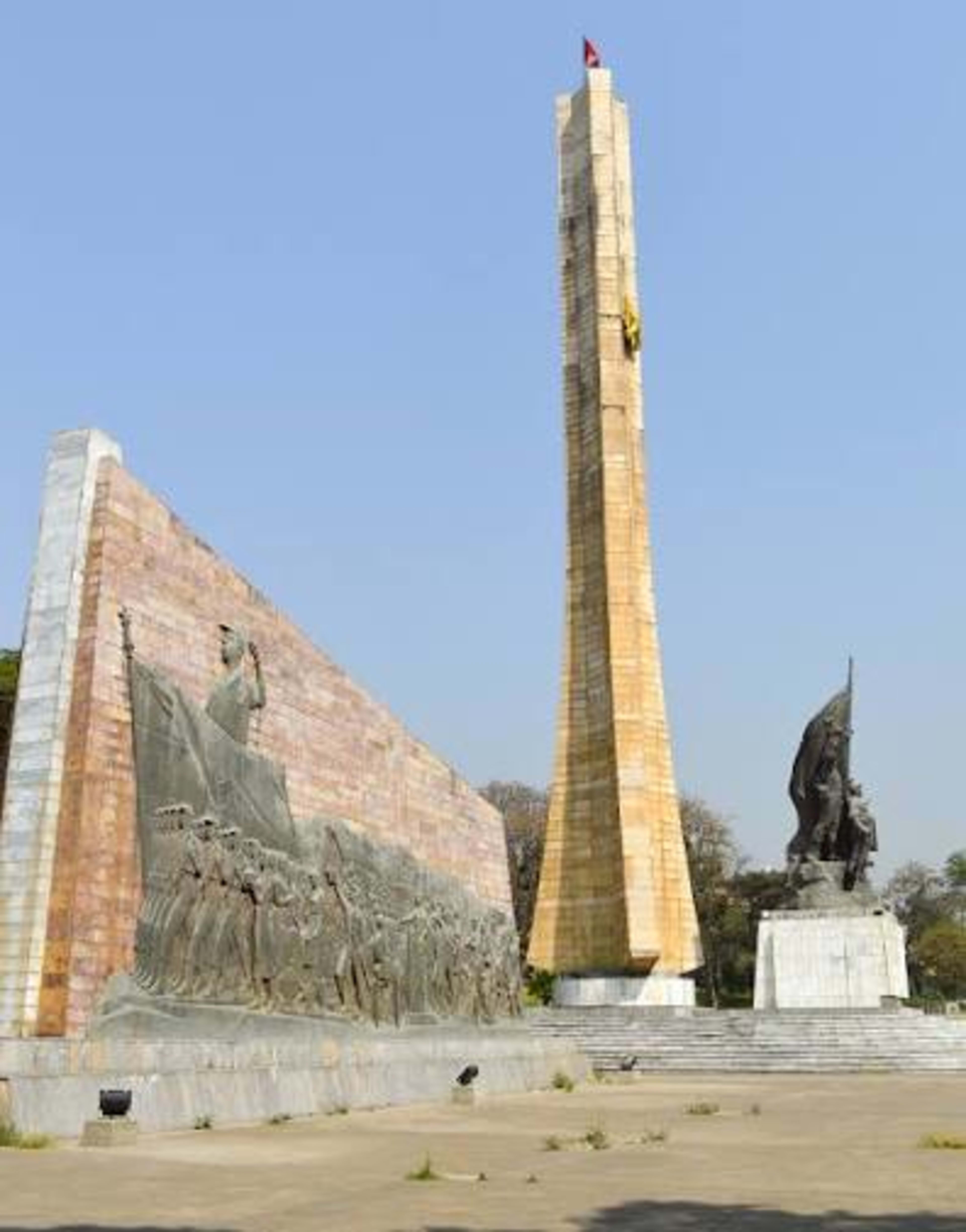
Tiglachin Monument
The Tiglachin Monument — whose name translates from Amharic as "Our Struggle" — is one of Addis Ababa's most architecturally striking and historically complex landmarks. Standing on Churchill Avenue, the city's grand ceremonial boulevard, the monument was commissioned during the rule of Colonel Mengistu Haile Mariam and inaugurated on 12 September 1984 to mark the tenth anniversary of the Derg regime.
The monument commemorates the Ethiopian and Cuban soldiers who fought and died during the Ogaden War (1977–1978), in which Cuba provided decisive military support to Ethiopia in its conflict with Somalia. It stands as a reminder of a pivotal moment in Cold War-era African politics and of the thousands of lives lost on both sides.
Architecture and Design
The Central Obelisk
The monument's most dramatic element is a 50-metre tall concrete pillar that dominates the Churchill Avenue skyline. Modelled in part on Ethiopia's ancient Aksumite obelisks, its scale commands attention from blocks away. At its summit, a five-pointed star — the symbol of the Derg's socialist ideology — once gleamed; the star was removed following the fall of the Derg in 1991.
Wall Reliefs
Flanking the central pillar are large wall reliefs depicting scenes from the Ogaden War: soldiers, weapons, and moments of struggle. These bas-relief panels are significant works of Socialist Realist art, a style that was prominent in Derg-era public art commissions.
Dual Squares and Portraits
Two flanking squares once displayed portraits of Cuban soldiers and officers involved in the conflict. Some of these panels have been altered over the years, but the structural ensemble remains largely intact.
The Symbolic Language
The monument is rich in ideological imagery — anti-imperialist symbolism, Marxist iconography, and Ethiopian revolutionary motifs are woven throughout the design. For students of 20th-century African history and Cold War politics, the monument is a remarkable primary source.
Historical Context
The Ogaden War was one of Cold War Africa's most significant conflicts. When Somalia invaded Ethiopia's Ogaden region in 1977, Cuba — at the personal urging of Fidel Castro — deployed tens of thousands of troops and military advisers to defend the Derg government. The Cuban intervention was decisive, and the war ended with Ethiopian forces retaking the Ogaden. Tiglachin was built to honour that alliance.
Following the fall of the Derg in 1991, the monument became a contested symbol. Its ideological messaging sits uneasily in modern Ethiopia, yet it remains standing as a significant piece of the city's layered history.
Visitor Tips
- The monument is best viewed on foot from Churchill Avenue.
- Combine with a visit to the nearby Jan Meda grounds or St. George's Cathedral (Arada Giorgis) for a full historical walk.
- The area is busy with traffic — take care when crossing to the monument.