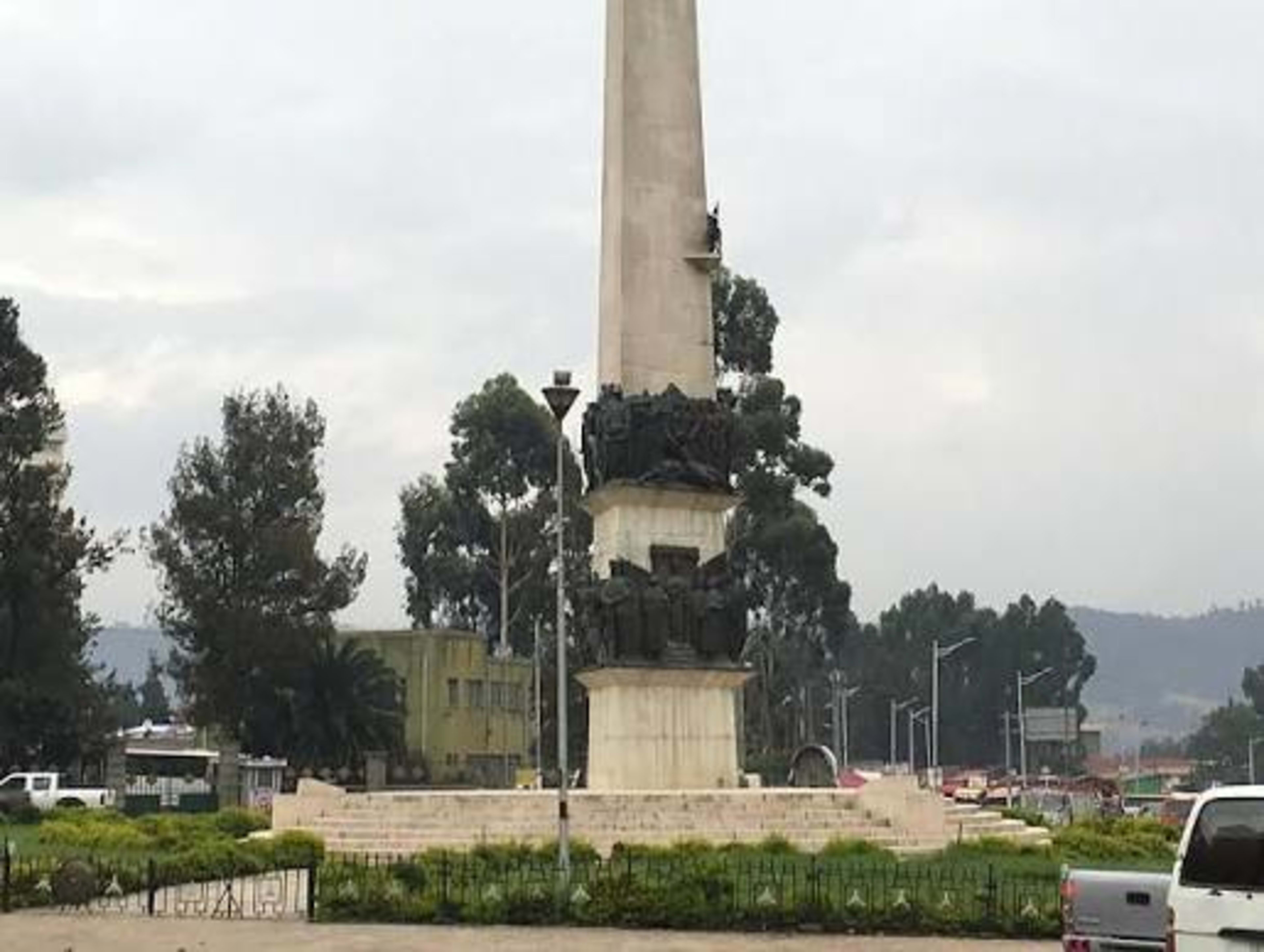
Yekatit 12 Square
Yekatit 12 Square — also known as Sidist Kilo (Six Kilometres) — is one of Addis Ababa's most significant public spaces, carrying the weight of one of the darkest episodes in Ethiopian history. The square and its monument commemorate the Yekatit 12 Massacre of February 19, 1937 (Yekatit 12 in the Ethiopian calendar), when Italian fascist occupying forces carried out a brutal reprisal against the civilian population of Addis Ababa following an assassination attempt on Italian Viceroy Rodolfo Graziani.
Over three days, Italian forces and their local collaborators killed thousands of Ethiopians — estimates range from 3,000 to 30,000 — in one of the worst atrocities of the Italian occupation (1936–1941). Intellectuals, priests, monks, and civilians were specifically targeted to destroy Ethiopia's educated and religious leadership.
The Monument
The Yekatit 12 Obelisk
At the centre of the square stands a striking obelisk erected in memory of the massacre's victims. The monument's design draws on Ethiopia's ancient Aksumite monolith tradition, connecting the modern memorial to the deep roots of Ethiopian civilisation. An eternal flame burns at its base on commemorative occasions.
Lions and Reliefs
Flanking the monument are sculptural elements including lions — the symbol of Ethiopia — and relief panels depicting scenes of struggle, mourning, and resistance. These create an atmosphere of solemn remembrance appropriate to the site's history.
The Surrounding Area
Addis Ababa University
Sidist Kilo is immediately adjacent to the main campus of Addis Ababa University, formerly Haile Selassie I University. The campus is one of East Africa's oldest and most prestigious institutions and occupies what was once part of the imperial palace grounds. The university's Institute of Ethiopian Studies houses important cultural collections.
The Roundabout
The square functions as a major traffic roundabout — one of the busiest in the city — which gives it a vibrant, kinetic energy. Pedestrians, students, and commuters move through it throughout the day, making it a living urban space rather than purely a memorial site.
Historical Memory
Yekatit 12 remains a touchstone of Ethiopian national identity. The massacre and Italy's broader occupation are remembered as a period of immense suffering but also extraordinary resistance — the Ethiopian Patriots who fought a guerrilla campaign throughout the occupation are celebrated as national heroes. The square ensures that this memory remains visible at the heart of the capital.
Italy formally apologised for the Graziani massacre in 2012, though debate over full acknowledgement and reparations continues.
Visitor Tips
- The square is best visited during daylight hours; morning light is good for photographing the monument.
- Combine with a walk through Addis Ababa University's campus (open to visitors during the day).
- The nearby National Palace is a short walk away for a combined historical itinerary.
- On February 19 (Yekatit 12), the square hosts commemorative ceremonies — a powerful time to visit.